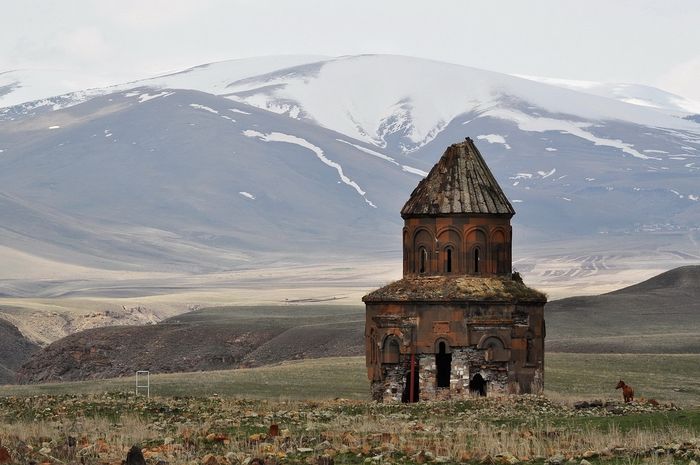
The people known today as Cappadocians were called Syrians by the ancient Greeks. In earlier times, before the Persians became powerful, these people were ruled by the Medes. Later, when the Persian Empire rose to greatness, Cappadocia became part of the empire of Cyrus the Great.
The natural border between the Median lands and the kingdom of Lydia was the Halys River, an important river in Asia Minor. This river begins in the mountainous regions of Armenia. From there, it flows first through Cilicia, then continues between different peoples and lands. On one side lived the Matieni, and on the other side the Phrygians. After passing these regions, the river turns north and separates the Cappadocian Syrians from the Paphlagonians, who lived on the opposite bank Croesus Misunderstands the Oracle.
In this way, the Halys River formed a boundary for much of Lower Asia, stretching from the sea opposite Cyprus all the way to the Euxine Sea, which we now call the Black Sea. At this narrow part of the land, an active traveler could cross the peninsula in about five days.
Why Croesus Attacked Cappadocia
King Croesus of Lydia had two main reasons for attacking Cappadocia. The first reason was simple ambition. He wanted to take control of the land and add it to his own kingdom. Croesus was wealthy and powerful, and he desired to expand his rule even further.
The second and more important reason was personal. Croesus wanted revenge against Cyrus, the king of Persia. Cyrus had defeated and removed Astyages, the king of the Medes, from his throne. Astyages was not only a former king, but also Croesus’s brother-in-law, which made the matter deeply personal.
Croesus believed that justice demanded revenge, and he also trusted the oracle, which he believed promised him success. This confidence led him to think that attacking Cappadocia would bring both honor and victory.
The Family Ties of Kings
Astyages was the son of Cyaxares, king of the Medes, and the grandson of an earlier ruler. Croesus had married into this royal family, creating a strong bond between Lydia and Media. Because of this marriage, Croesus felt a duty to avenge Astyages after he was overthrown by Cyrus, the son of Cambyses Walking Guided Tours Ephesus.
The fall of Astyages marked a turning point in the balance of power in the region. The Medes, once rulers, were now subjects of the Persians. Cyrus’s success made him one of the most powerful rulers of his time.
The Rise of Cambyses
After the death of Cyrus, the Persian throne passed to his son Cambyses, who was born to Cyrus and Cassandane, the daughter of Pharnaspes. Cassandane had died before Cyrus, and her death deeply affected him. Cyrus ordered all his subjects throughout the empire to mourn her loss, showing how much she was respected.
Cambyses inherited not only the throne but also a vast empire. He regarded the Ionian and Aeolian Greeks as subjects of his father and therefore under his authority. When Cambyses planned his campaign against Egypt, he required these Greek peoples to join him, along with many other nations ruled by Persia.
A World Shaped by Power and Borders
This period was marked by shifting borders, family alliances, and growing empires. Rivers like the Halys shaped political boundaries, while marriages connected kings across nations. Croesus’s attack on Cappadocia was not only a military action, but also the result of ambition, family loyalty, and trust in divine guidance. These choices would soon have lasting consequences for Lydia and the wider ancient world.